
Selecting a CNC pipe bending machine is not simply a matter of choosing the highest tonnage or the largest tube diameter. The right machine must match your tube material, geometry, production volume, accuracy requirements, and future product plans. A well-matched system can reduce setup time, control scrap, and deliver repeatable bends across different batches.
This guide explains the main factors buyers should evaluate before investing in a CNC tube bending solution.
1. Define the Tube Specifications
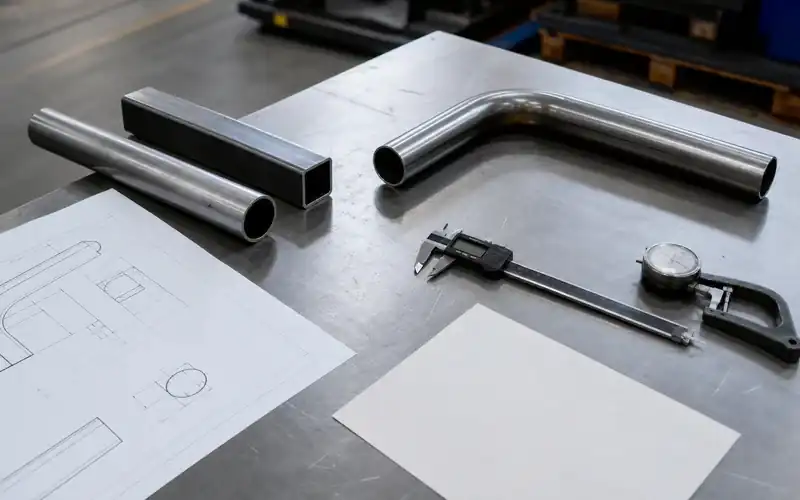
Begin with the parts you need to produce. Prepare a clear specification sheet covering the following information:
- Tube outside diameter
- Wall thickness
- Tube material and grade
- Round, square, rectangular, or special profile
- Minimum bending radius
- Maximum bending angle
- Number of bends per part
- Distance between bends
- Required dimensional tolerance
Material behavior is especially important. Stainless steel, carbon steel, aluminum, copper, and high-strength alloys react differently during bending. Springback, elongation, surface sensitivity, and ovality requirements all influence machine configuration and tooling design.
2. Match the Machine Capacity to the Real Application
A machine should be selected according to the most demanding part in your current product range, with reasonable allowance for future projects. Oversizing can increase investment and floor-space requirements, while undersizing may limit bend quality or make certain parts impossible to produce.
Machine capacity should be reviewed as a combination of tube diameter, wall thickness, material strength, and centerline radius. Diameter alone is not enough to determine whether a machine is suitable.
3. Choose the Appropriate Number of Controlled Axes
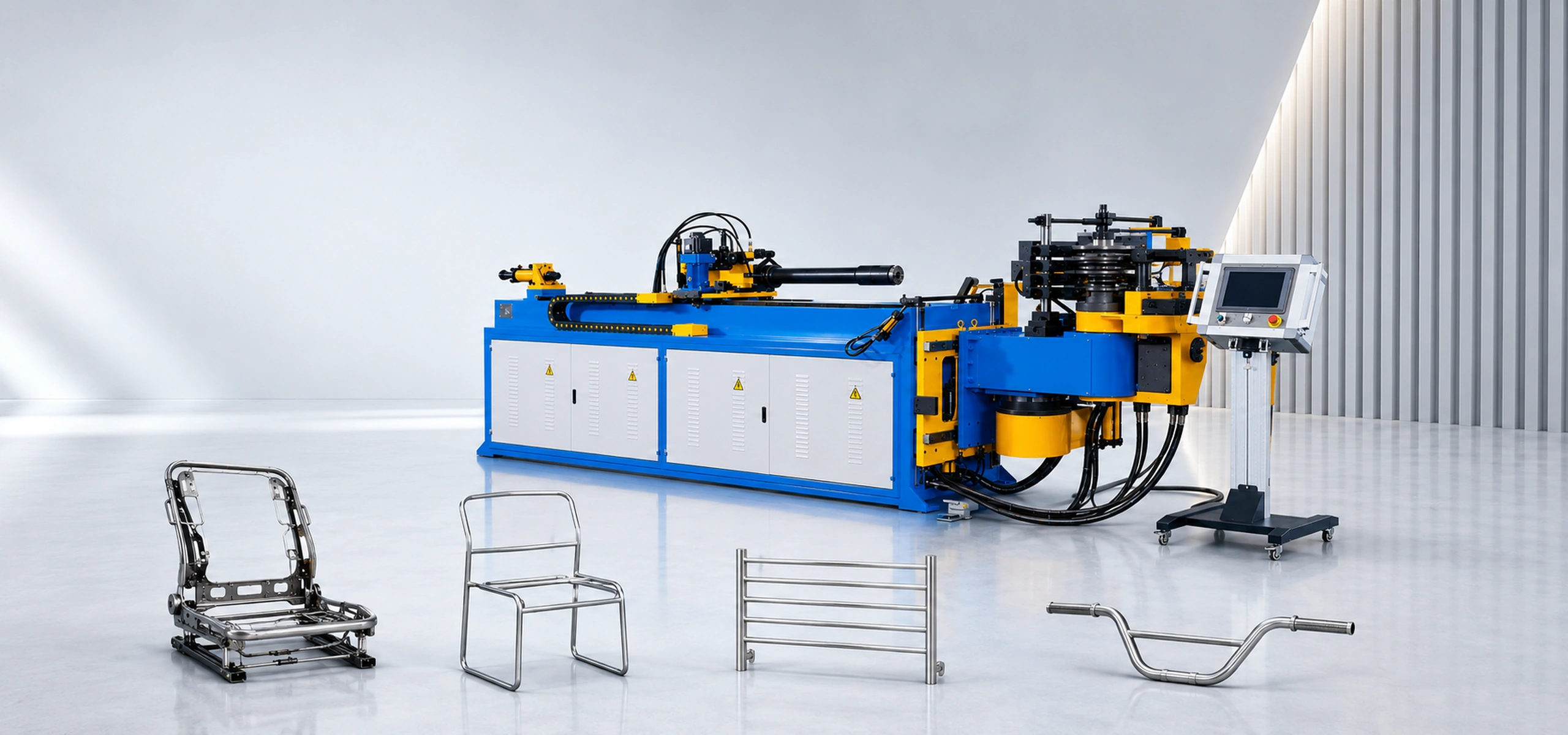
CNC pipe bending machines can use different axis configurations to automate feeding, rotation, bending, tooling movement, and other functions. The ideal configuration depends on part complexity and production expectations.
For simple parts and moderate production
A practical CNC configuration may provide the required accuracy without unnecessary automation. This can be suitable for stable product families with limited changes.
For complex multi-bend components
Parts used in automotive seat frames, motorcycle handlebars, fitness equipment, furniture, and fabricated tube assemblies may benefit from additional controlled axes. Higher automation can improve consistency, reduce manual intervention, and shorten changeover time.
The goal is not to purchase the largest number of axes. The goal is to automate the motions that directly improve your process.
4. Evaluate Bending Quality Requirements
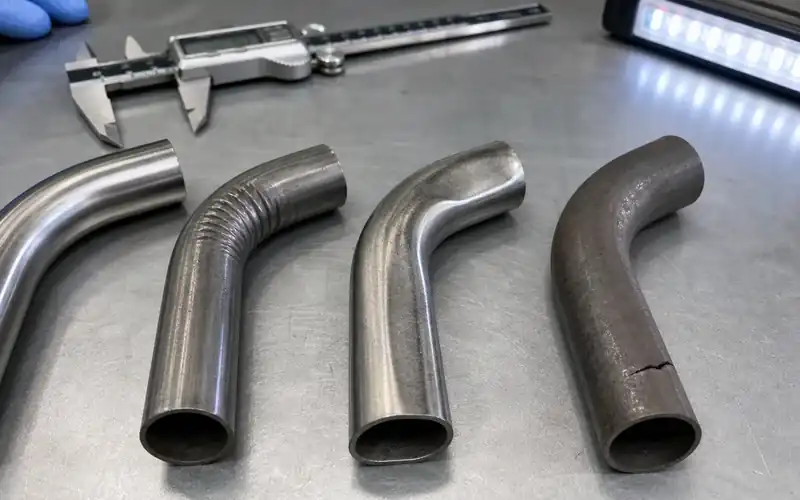
High-quality tube bending requires control of several common deformation risks:
- Wrinkling on the inside radius
- Excessive flattening or ovality
- Wall thinning on the outside radius
- Surface marks
- Uncontrolled springback
- Inconsistent bend angles between batches
Depending on the tube specification and bend radius, the process may require a mandrel, wiper die, pressure die assistance, boost control, or other tooling strategies. Tight-radius or thin-wall applications should always be evaluated with drawings and sample material before the final machine configuration is confirmed.
5. Consider Production Volume and Changeover Frequency
A high-volume production line has different priorities from a workshop producing many part numbers in smaller batches.
For repeat production, buyers may prioritize automatic loading, fast cycle time, integrated cutting, part detection, and connection with downstream equipment. For high-mix production, recipe management, quick tooling change, easy programming, and operator-friendly setup may provide greater value.
When comparing solutions, calculate the complete workflow rather than only the bending cycle. Material preparation, loading, unloading, inspection, tooling change, and data entry all affect real output.
6. Review the Control System and Programming Workflow
The control interface should help operators create, store, and recall bending programs efficiently. Important functions may include:
- Multi-step program management
- Production recipe storage
- Springback compensation
- Interference checking
- Tooling and parameter libraries
- Alarm diagnostics
- Production counting
- Data export or line integration options
Ask the supplier to demonstrate how a new part is programmed and how corrections are made after the first trial bend. A clear workflow can reduce training time and dependence on highly experienced operators.
7. Confirm Tooling and Sample Testing
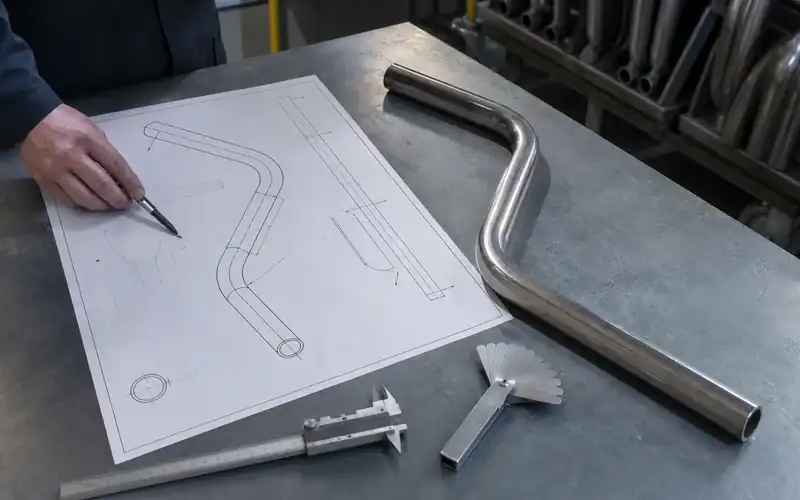
Bending tooling has a direct impact on part quality. The machine and tooling should therefore be evaluated as one system. Provide accurate 2D or 3D drawings, tube specifications, material samples, and quality criteria whenever possible.
A sample bending test can help verify:
- Whether the selected configuration is appropriate
- Expected surface quality and dimensional accuracy
- Tooling arrangement
- Cycle sequence
- Potential interference between bends
- Requirements for loading and unloading
8. Plan for Integration and Future Expansion
If your production process includes cutting, chamfering, end forming, punching, welding, or inspection, consider how the bending machine will connect with these operations. A standalone machine may be the best choice for flexible production, while an integrated tube processing line may reduce handling for stable, high-volume products.
Discuss future part sizes, automation plans, available factory space, power supply, and preferred material flow before finalizing the layout.
9. Assess Technical Support and Documentation
A reliable equipment solution should include more than the machine itself. Confirm the available installation guidance, operation manuals, training, remote troubleshooting, spare-parts support, and tooling assistance. Clear documentation is particularly important for international projects and multi-shift production.
Questions to Send Your Machine Supplier
To receive an accurate recommendation, prepare the following details:
- Part drawing
- Tube material, shape, diameter, and wall thickness
- Bending radius and angle
- Annual or shift production target
- Required tolerance and appearance standard
- Current manufacturing process
- Preferred automation level
- Factory layout or space limitations
Conclusion
The best CNC pipe bending machine is the one configured around your actual parts and production process. A detailed technical review before purchase helps avoid unnecessary cost, reduces project risk, and creates a clearer path from sample testing to stable production.
Raysun Equipment provides one-stop pipe and tube processing equipment solutions, including CNC pipe bending, cutting, chamfering, end forming, punching, and customized processing systems. Share your tube specifications and drawing with our team to discuss a suitable machine configuration.
Send Your Drawing for Machine Recommendation
Frequently Asked Questions
What information is required to select a CNC pipe bending machine?
The most important information includes tube material, profile, outside diameter, wall thickness, bending radius, bend angles, part drawing, tolerance, and production capacity.
When is mandrel bending recommended?
Mandrel bending is commonly considered for thin-wall tubes, tight bending radii, or applications with strict ovality and wrinkle-control requirements. The final decision should be based on the complete part specification and sample evaluation.
Can one machine produce different tube parts?
Yes. A CNC bending machine can usually store multiple programs and work with different tooling sets within its rated capacity. Changeover time and tooling requirements should be reviewed for each product family.